Atsuta Jingu: The Complete Guide
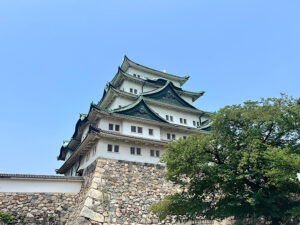
Nagoya Castle gets most of the attention from first-time visitors, but Atsuta Jingu is arguably the more significant site historically. Founded roughly 1,900 years ago, it’s one of the most revered Shinto shrines in Japan, believed to house the Kusanagi no Tsurugi, the legendary sacred sword and one of Japan’s Three Imperial Regalia. Unlike the reconstructed castle, Atsuta Jingu offers a quieter, more contemplative experience: a genuine forest shrine in the middle of the city, largely untouched by the crowds that gather at more famous sites like Kyoto’s Fushimi Inari.
This guide covers the shrine’s history, what to see, and practical details for visiting.
A Brief History
Atsuta Jingu’s origins trace back to the legend of Yamato Takeru, a semi-legendary prince said to have used the Kusanagi no Tsurugi sword in battle. According to tradition, after his death, his wife enshrined the sword here, and the shrine has stood as one of Japan’s most important religious sites ever since, ranking just behind Ise Grand Shrine in terms of historical and spiritual significance.
While the sword itself is never displayed publicly (its exact presence and condition remain a closely guarded matter of religious tradition rather than public record), its legendary status has made Atsuta Jingu a major pilgrimage site for centuries.
What to See
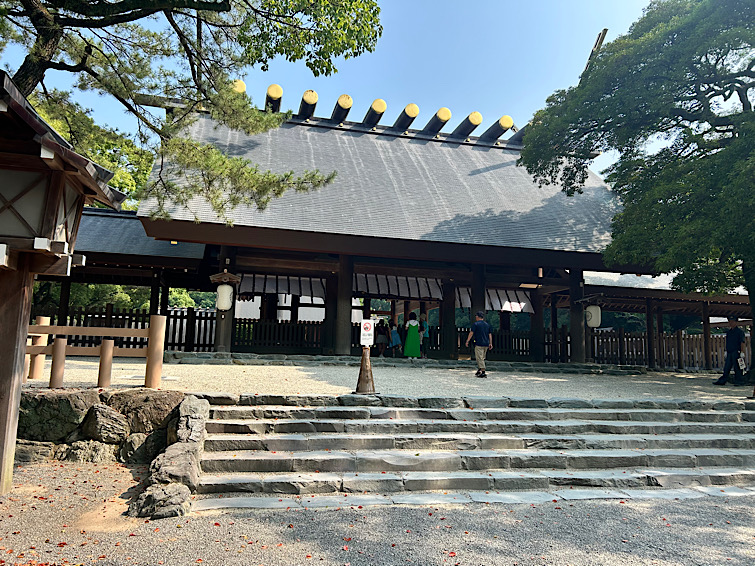
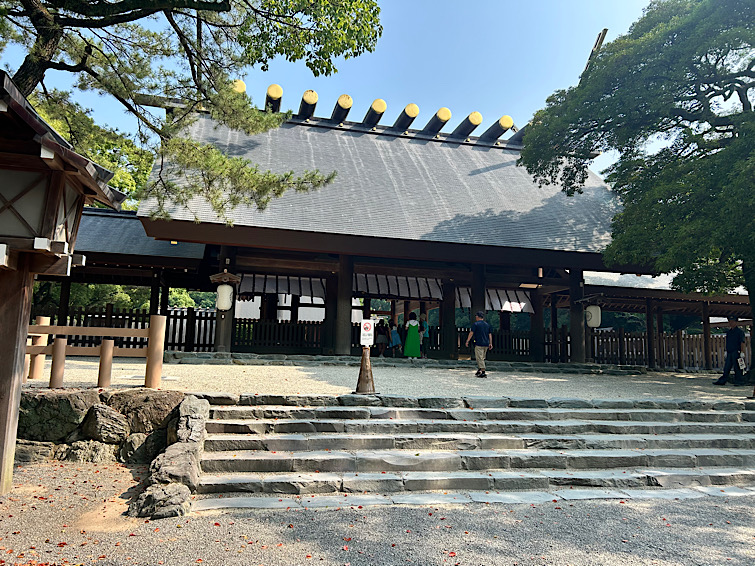
The Main Shrine (Honden)
The central worship hall, rebuilt in a simple, dignified style consistent with traditional Shinto architecture. As with most shrines in Japan, visitors approach to pray but do not enter the innermost sanctuary itself.
The Forest Grounds
What sets Atsuta Jingu apart is the surrounding forest, home to trees estimated to be over 1,000 years old. Walking the main approach path (sando) beneath these massive camphor trees is, for many visitors, more memorable than the shrine buildings themselves.
Treasure Hall (Homotsukan)
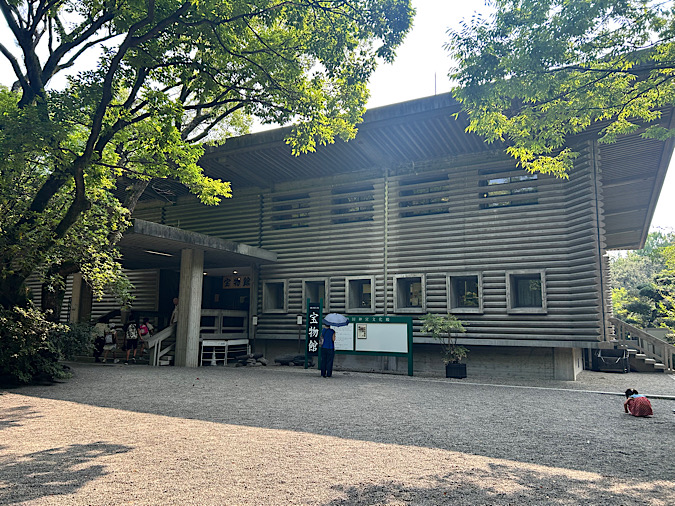
A museum on the shrine grounds housing thousands of artifacts related to the shrine’s history, including swords, mirrors, and ceremonial items donated over centuries. A separate admission fee applies, but it’s worth the visit for anyone interested in Japanese religious history and craftsmanship.
Kusanagi-no-Miya and Other Sub-Shrines
Beyond the main hall, the grounds include numerous smaller shrines, each dedicated to different deities. Many visitors enjoy simply wandering between them rather than following a strict route.
Local Tip: Most tourists head straight to the main shrine and leave. Locals who visit regularly often make time to walk the full loop of sub-shrines on the eastern side of the grounds, an area that stays quiet even during Atsuta Jingu’s busiest festival days.
Festivals and Events
Atsuta Jingu hosts numerous festivals throughout the year, but the largest is the Atsuta Festival (Atsuta Matsuri) held in June, featuring a large fireworks display, a rarity for a shrine event in Japan. If your visit lines up with this, it’s worth checking the schedule, as the atmosphere shifts dramatically from the shrine’s usual quiet character.
Practical Information
Hours: The shrine grounds are open 24 hours, though the main worship hall’s active hours and the Treasure Hall follow set daytime schedules (generally around 9:00 AM to 4:30 PM for the Treasure Hall). There is no admission fee for the shrine grounds themselves.
Time needed: 45 minutes to an hour for the main grounds; add 30-45 minutes if visiting the Treasure Hall.
Best time to visit: Early morning is genuinely special here. The forest paths are quiet, the light filtering through the trees is beautiful, and it avoids both the heat and the crowds of midday.
Local Tip: Many Nagoya locals visit Atsuta Jingu specifically for New Year’s prayers (hatsumode), when the shrine becomes one of the busiest in the region. If you want the quiet, forest-shrine atmosphere the site is known for, avoid the first few days of January entirely.
How to Get There
Atsuta Jingu is easily accessible by subway.
- By subway: Take the Meijo Line to Jingu Nishi Station, Exit 2. The shrine’s main entrance is a short walk away.
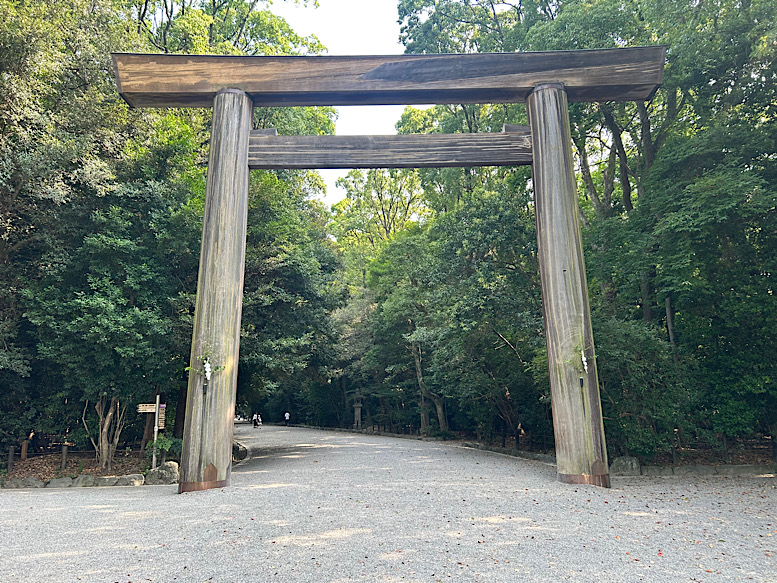
- Alternative route: Take the Meitetsu Line to Jingumae Station, which places you near the shrine’s main torii gate.
- From Nagoya Station: The trip takes approximately 15-20 minutes by subway or train.
Nearby Food
The area around Atsuta Jingu is closely associated with one of Nagoya’s most famous dishes: Atsuta-style kishimen (flat wheat noodles) and hitsumabushi. Several long-established restaurants near the shrine grounds have served visitors for generations, making this one of the best areas in the city to try authentic Nagoya cuisine in a setting with real history behind it.
Tips for First-Time Visitors
- Dress respectfully. While there’s no strict dress code, this remains an active religious site.
- Follow basic shrine etiquette: a small bow before passing through the torii gate, and the standard purification ritual (rinsing hands and mouth) at the water basin near the entrance.
- Bring some small coin change. The offering box (saisen-bako) at the main hall is cash-only, and there’s nowhere nearby to break a large bill on the spot. A handful of 100-yen or smaller coins before you arrive saves an awkward moment when it’s your turn to pray.
- Photography is generally permitted on the grounds, but be mindful around worshippers actively praying.
- Combine your visit with Jingu-mae or Atsuta Station’s surrounding streets for a relaxed half-day itinerary centered on history and food.
Final Thoughts
Atsuta Jingu offers something Nagoya Castle can’t: an unbroken, nearly two-millennium connection to the site’s original purpose. For visitors interested in Japan’s spiritual history, or simply looking for a quiet, forested escape within the city, it’s one of Nagoya’s most rewarding stops, and one that surprisingly few first-time tourists prioritize.

Comments